News Story
Capstone Design Expo 2026: Students Solve for Maryland & Beyond
2026 At a Glance
- Student projects: 143
- Participating students: 760
- Departments represented: All eight plus Vertically Integrated Projects (VIPS)
- Awards: Eight (One per department)
- Prizes: $250 to donate to a campus charity
- Judges: Subject matter experts, including faculty, alumni, and industry leaders
Lead Sponsors
- The Whiting-Turner Contracting Company
- Boeing Company
Get Involved & Learn More
- View all projects.
- Visit the Capstone Design Expo website.
Cheered on by family, friends, peers, alums, and industry experts, more than 750 engineering students demonstrated unique solutions to real-world challenges—on campus, across the state of Maryland, and even on the moon—at the third annual Capstone Design Expo held at the Xfinity Center on May 6, 2026. The senior showcase, a culmination of semester- and year-long projects (143 this year alone!) demonstrates the best in student innovation, collaboration, and the future of engineering.
“Part of what makes Maryland Engineering unique is how we help students translate classroom and lab knowledge into real-world experience. What we’ve seen our students accomplish tonight is the reason our faculty and staff are optimistic about the future.”
Clark School Dean Samuel Graham
Through the process, students gained experience creating engineering solutions and receiving all-important feedback from professionals in engineering fields, helping to launch them into the next stage of their careers. Judges represented a wide array of industries and organizations, including sponsoring companies The Whiting-Turner Contracting Company and the Boeing Company; Washington, D.C. area organizations, including Children’s National Hospital; and global companies, including Stanley Black & Decker.
“I can say without question, you have engineered for the public good. Each and every one of you designed in ways that clearly benefit society.”
Ramsey Jabaji, assistant dean for engineering student affairs
Increasing Sustainability, Viability, Across Industries
Department of Electrical and Computer Engineering
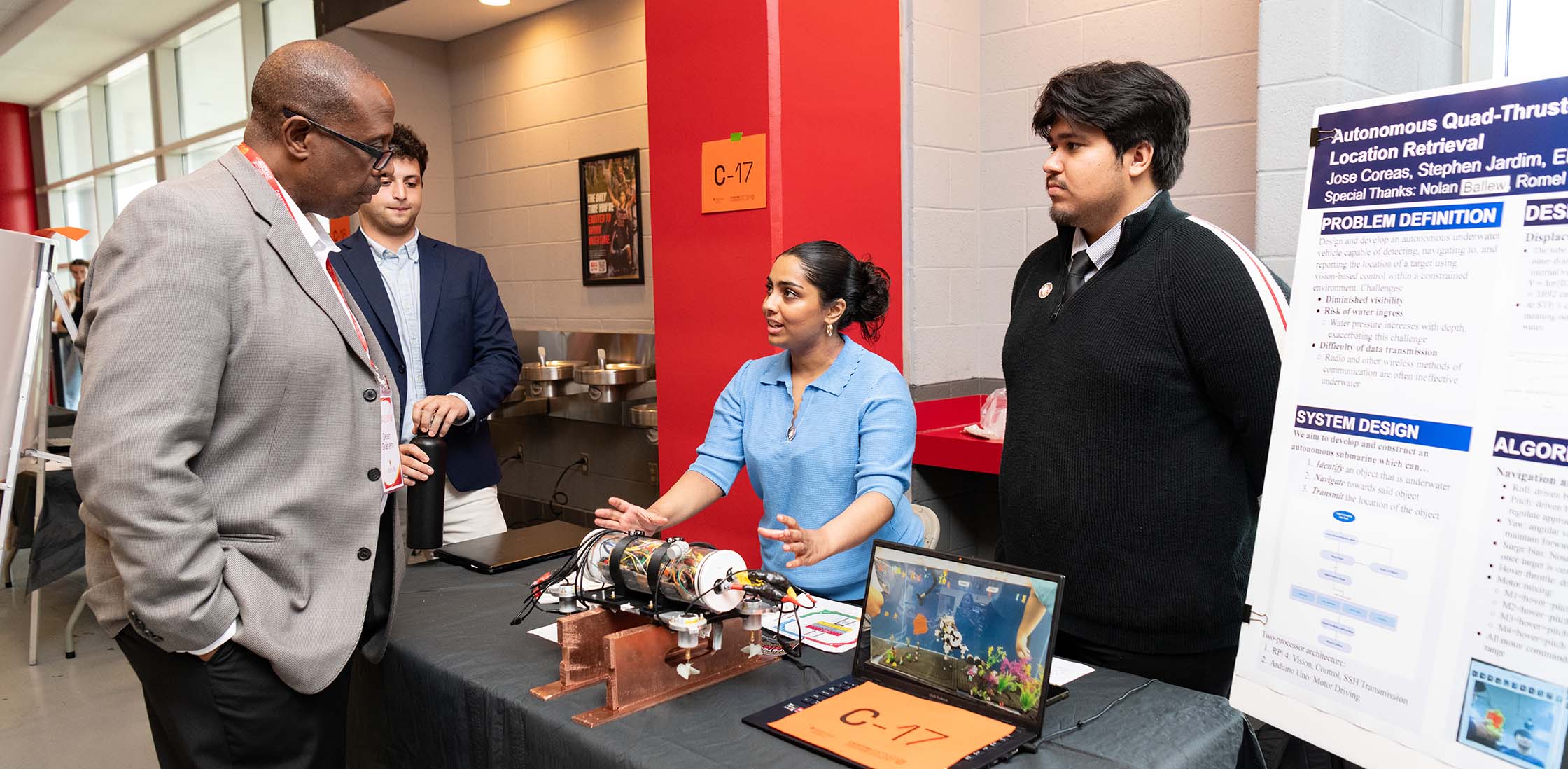
Of the 23 electrical and computer engineering teams, four were tasked to build an autonomous submersible motor vehicle (SMV) capable of detecting, navigating to, and reporting the location of a target object in a constrained aquatic environment.
One of the SMV teams took a local focus, positing that their vehicle could be used to detect and report invasive species or even help with oyster harvesting in the Chesapeake Bay. “The hope is to restore the Chesapeake Bay, a big topic here at Maryland,” said team member Jad Khleif. “My team said, ‘Why not do this [project] for good?’”
Camera-based Vision for Submersibles | Dept Winner
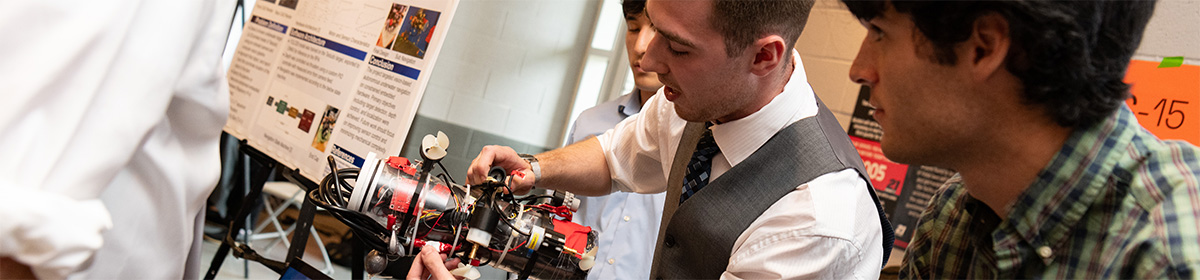
The electrical and computer engineering students developed HSV color masking and contour detection to provide camera-based vision for submersibles.
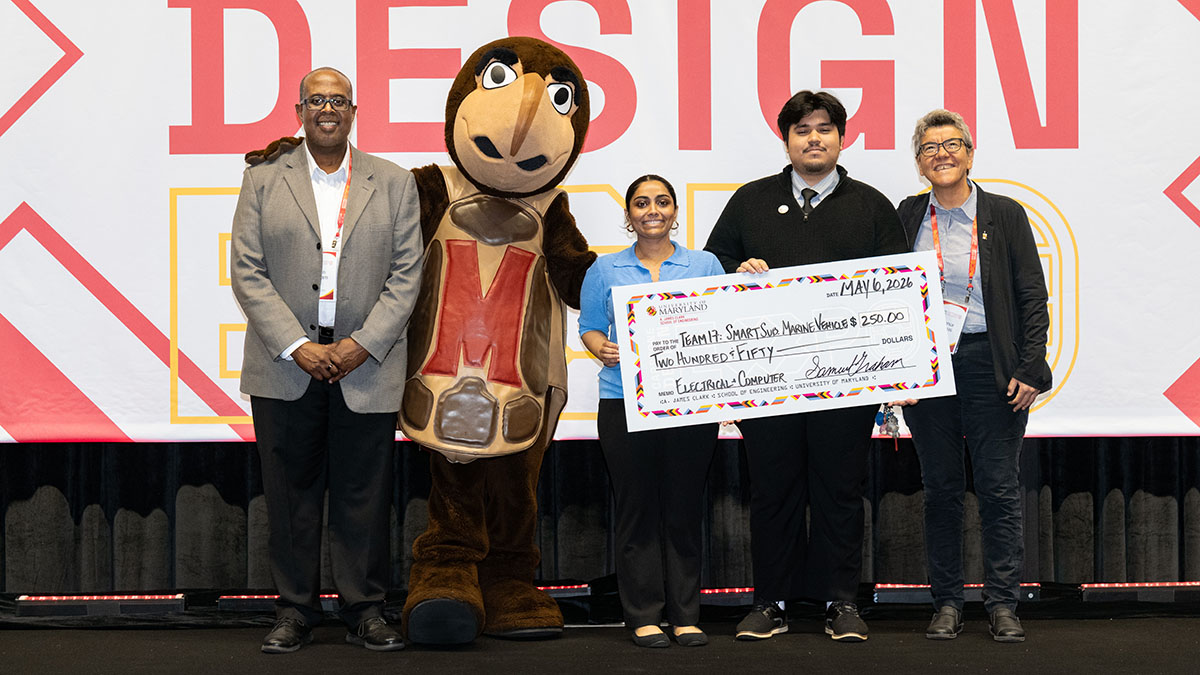
Another SMV team—“Smart Submersible Marine Vehicle”—received the department’s top prize. Advised by Professor and Associate Chair for Undergraduate Education Romel (Mel) Gomez, this winning team used a camera-based vision system with HSV color masking and contour detection to identify the target, while pixel-based error guides motion through a closed-loop control system.
Computer-Aided American Sign Language
With teams aimed at solving problems related to the environment, healthcare, security, education, and communication, other projects included the “Single Hand Real-Time ASL Alphabet & Numbers to Text Translator and Trainer,” a solo effort from Nishanth Sasikumar, a student in UMD’s new Cyber-Physical Systems Engineering program at the Universities at Shady Grove, advised by Lecturer Jerry Wu. The project converts simple hand signs into text using computer vision and neural networks, achieving over 99% accuracy.
“I wish this was around when I had to learn sign language,” said event visitor Bob Worrell, whose daughter is profoundly deaf. Worrell was attending the Expo in support of his grandson, aerospace engineering senior Tyler Worrell. “It would have been a lot easier.”
Conducting Innovation for Earth and Lunar Missions
Department of Aerospace Engineering
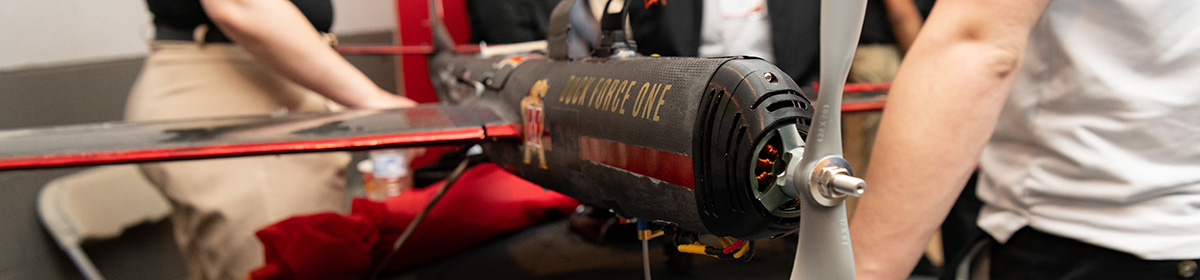
From conducting earthquake disaster relief in Ecuador to transporting water across the lunar surface, and from aerial firefighting to aero reforestation, aerospace engineering students innovated with the public good in mind.
Reliable, Semi-autonomous Lunar Lander | Dept Winner
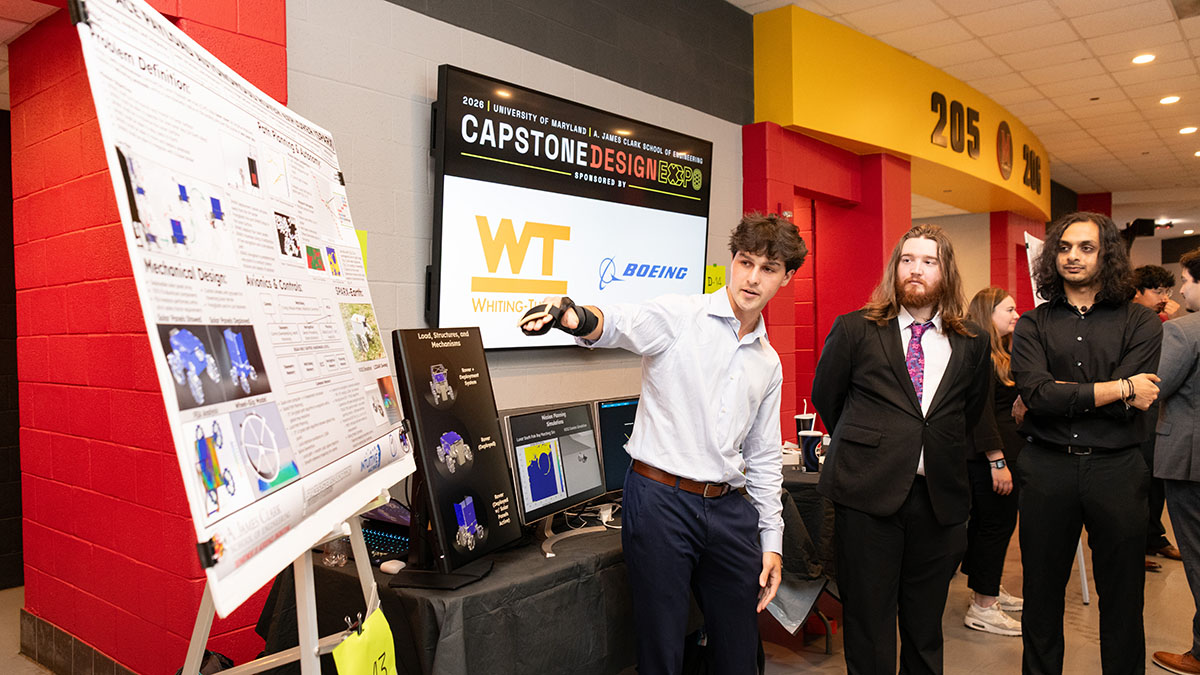
Three of the 21 students on the winning aerospace team: They helped design a lunar lander that could deliver supplies remotely.
Winning Expo project “IM-SPARX” (SURFACE PAYLOAD AUTONOMOUS ROVER eXPLORER) tackled various problems inherent in commercial lunar payload services (CLPS): surviving the launch and transmission to the lunar surface, operating and relaying data to Earth, storing and deploying payloads, and integrating with a lander.
The mission: design a semi-autonomous CLPS-class lunar rover capable of delivering payloads within a one kilometer radius of the landing site over the course of one lunar day (14 Earth days).
Working in UMD’s Space Systems Lab, with sponsor Intuitive Machines’ Eclipse lunar lander, and with advising from Lecturer Brent W. Barbee and Professor David Akin, the team provided the ability for customers to transport and drop scientific payloads at various points far afield.
Requiring advanced structural analysis, power and thermal planning, and an in-depth autonomy and navigation stack, the SPARX team designed the hardware and software from the bottom up, for an entire lunar surface mission.
Connecting Humans to Surface Modules on the Moon
Another lunar project, “Self-Deploying Human Extravehicular Logistics Linkage (SHELL),” provided a robotic pressurized tunnel capable of autonomously connecting lunar surface modules for crew and logistics transfer.
In support of NASA’s Artemis program’s objectives, with Akin as adviser, SHELL enables human presence on the Moon by reducing Extravehicular Activity (any activity performed by an astronaut in outer space outside of a spacecraft) risk during transfer between modules.
Requisitioned by NASA’s eXploration Habitat (X-Hab) Academic Innovation Challenge, the project made good use of a large and varied team for the many-step process.
Biggest takeaway: “We had all sorts of simulations, computational methods, and analysis,” said team member Bence Szego. “But I wasn’t totally prepared for how important prototyping would be—working with materials, feeling the weight in our hands, designing buckle points. It was really vital to where we ended up.”
Innovating for Access, Safety, and Affordability
Department of Mechanical Engineering

From healthcare to heating, from seabed exploration to fire drones, and from rescue bridges to assistive and automated designs for people of all ages, mechanical engineering project teams designed solutions with people in mind.
Automated Rebar Tying | Dept Winner
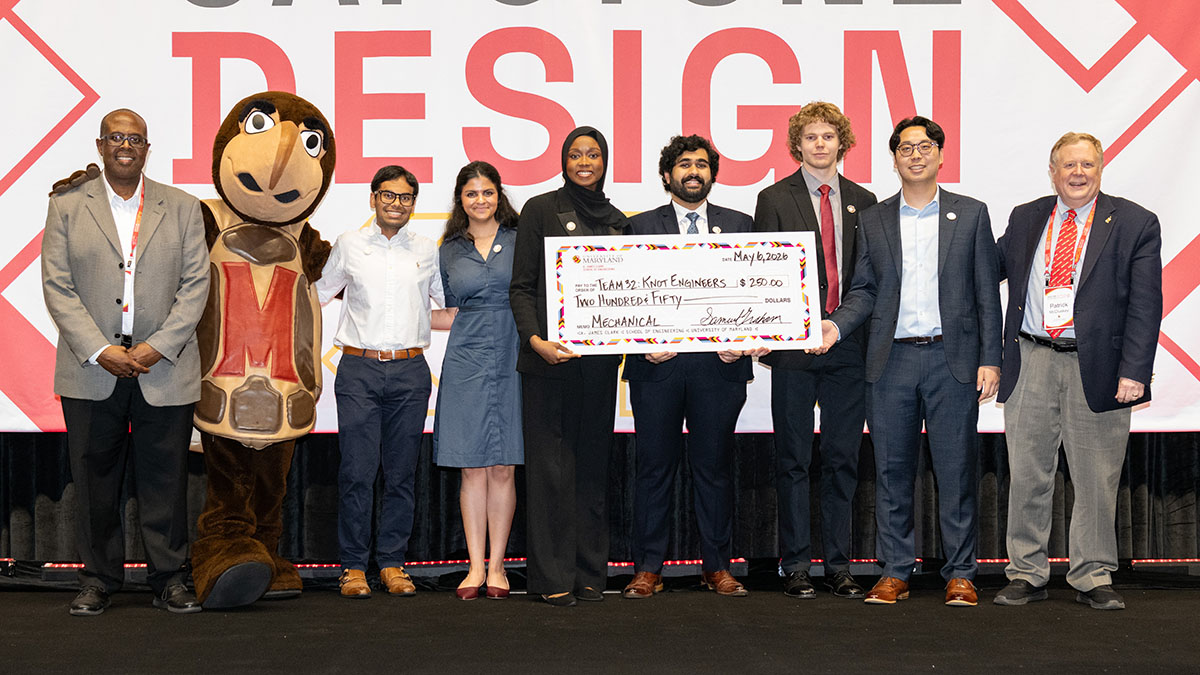
The winning mechanical engineering project designed a tool to tie rebar, offering huge benefits to construction workers and job success.
Winning team “Knot Engineers” developed a rebar tie gun attachment for rapid and ergonomic construction use. Advised by Professor David Bigio, and sponsored by Stanley Black & Decker, the team tackled the repetitive and physically demanding task of rebar tying.
Focused on designing an attachment that connects to a standard impact driver to automate the process and make it faster and easier to use, a claw mechanism secures the rebar intersection and a twisting system to create consistent ties with minimal user effort.
The winning result: a practical and low-cost solution that can increase productivity on construction sites.
Assistive Devices for Automated Feeding and Therapeutic Motion
Among the assistive engineering projects featured at the Expo, two are projects from “Entrepreneurial Design Realization,” a course taught by Principal Lecturer Vince Nguyen: the FEEED (Feeding Equipment for Eating with Enhanced Dignity) Device and the SMILE (Safe Motion for Inclusive Leisure and Exercise) Swing, a “cool and deceptively difficult project,” said Nguyen.
“Both projects were started through a partnership with Volunteers for Medical Engineering (VME), have evolved over semesters of iterations, and are maturing to the point where we are beginning to look for additional funding/support to expand for further impact.”
The SMILE Swing provides aid to individuals with disabilities by offering therapeutic benefits. VME receives requests for three to five automated therapy swings per year in Maryland, but the project has been attempted by several local universities with limited success. The SMILE Swing provides a robust and reproducible product meant to serve as a universal solution for all client implementations in the future.
New to this semester’s iteration is the weatherproofing of the electric and sensing swing—this one is to be used outside by a 13-year-old VME client named Avaleigh. “Swinging has good correlations for health, in terms of stimulation of sensory and vestibular systems and muscle development,” said team member Teddy Hersey. “This project challenge has gone on over about four semesters. But after this event, we’re going to deliver it to her.”
Building Sustainable Chemical Manufacturing Processes for Maryland
Department of Chemical and Biomolecular Engineering
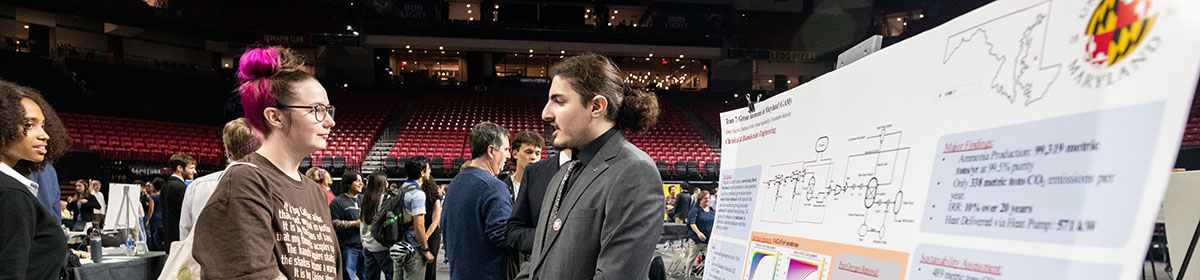
Chemical and biomolecular student teams, all under the guidance of Professor Ray Adomaitis, targeted industries and their chemical manufacturing processes that are relevant to the state of Maryland. Focusing on quantifiable sustainability, the teams applied their knowledge and skills to a wide range of solutions, from poultry farming waste reprocessing to designing a small-scale chlor-alkali plant for safe handling of hazardous chlorine. “Not all of the projects are necessarily grassroots but retrofits to bring to a sustainable future,” said Adomaitis. “We pushed for economic sustainability, energy sustainability, water sustainability, and carbon sustainability, most importantly.”
Capping off a successful semester, Adomaitis plans to submit project findings to the Digital Repository at the University of Maryland (DRUM), which provides public access to the scholarly output of the university.
Improvements to Aspirin Manufacturing | Dept Winner
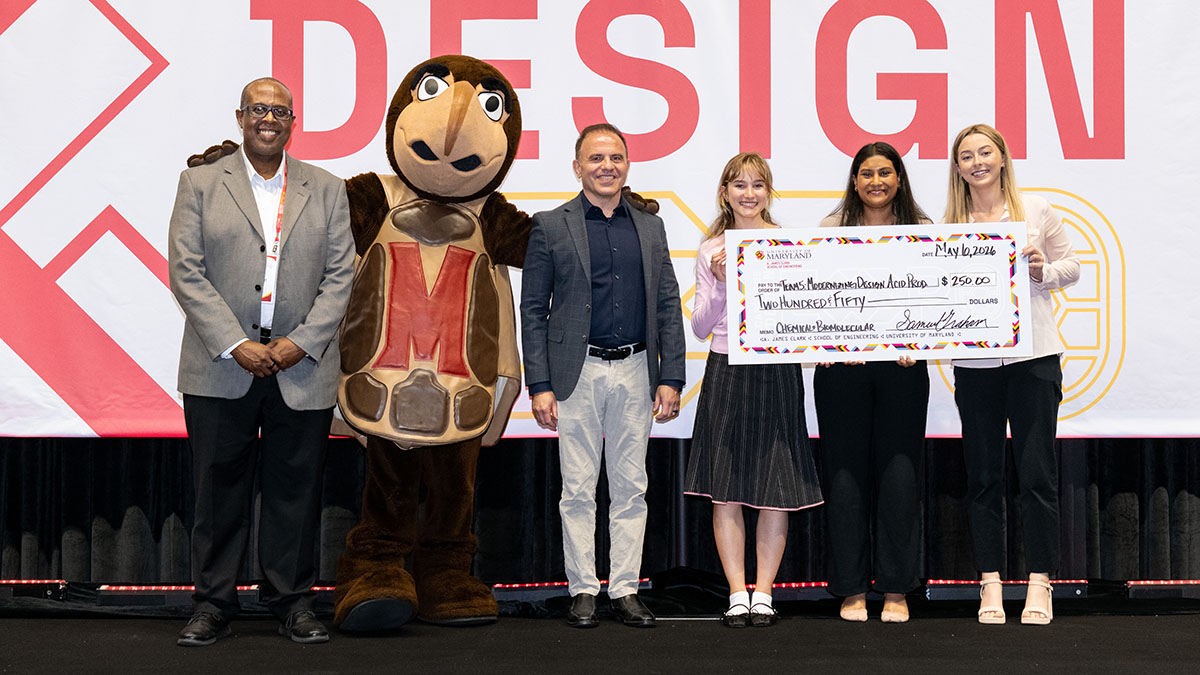
The winning project from the Department of Chemical and Biomolecular Engineering could help Maryland-based GSK improve the manufacturing of aspirin.
The winning project, “Modernizing the Process Design of Acetylsalicylic Acid Production,” provides a solution to the current process of producing aspirin that poses serious environmental and economic concerns. The new solution would provide a viable manufacturing system for Rockville, Maryland-based pharmaceutical company GSK, reducing both water usage and hazardous air pollutants.
Recycling Plastics Profitably and Environmentally
Another team aimed to demonstrate that chemical recycling of plastic waste can be not only environmentally beneficial, reducing landfill burden and ocean pollution, but also genuinely profitable. They proposed a next-gen approach for an incinerator to be sited near Baltimore. “The idea is to capture the methane gas produced by an incinerator and recycle it, so it isn’t lost but is captured—and utilized,” said team member Christine Nguyen. “This is a more idealistic, futuristic approach to reusing plastic waste.”
Targeting Health, Safety, and Wellbeing for Patients and Providers
Department of Bioengineering
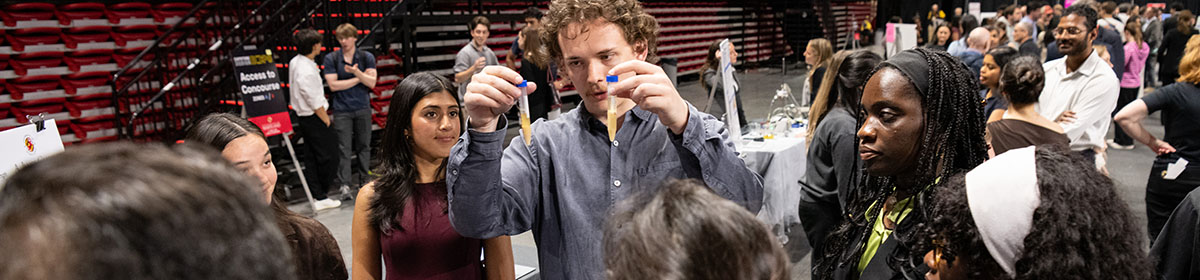
Bioengineering projects focused on improving clinical therapies, reducing clinical burden, and ensuring patient safety in clinical and hospital settings, and even on the battlefield.
Cost-effective, Customizable Vaginal Stent | Dept Winner
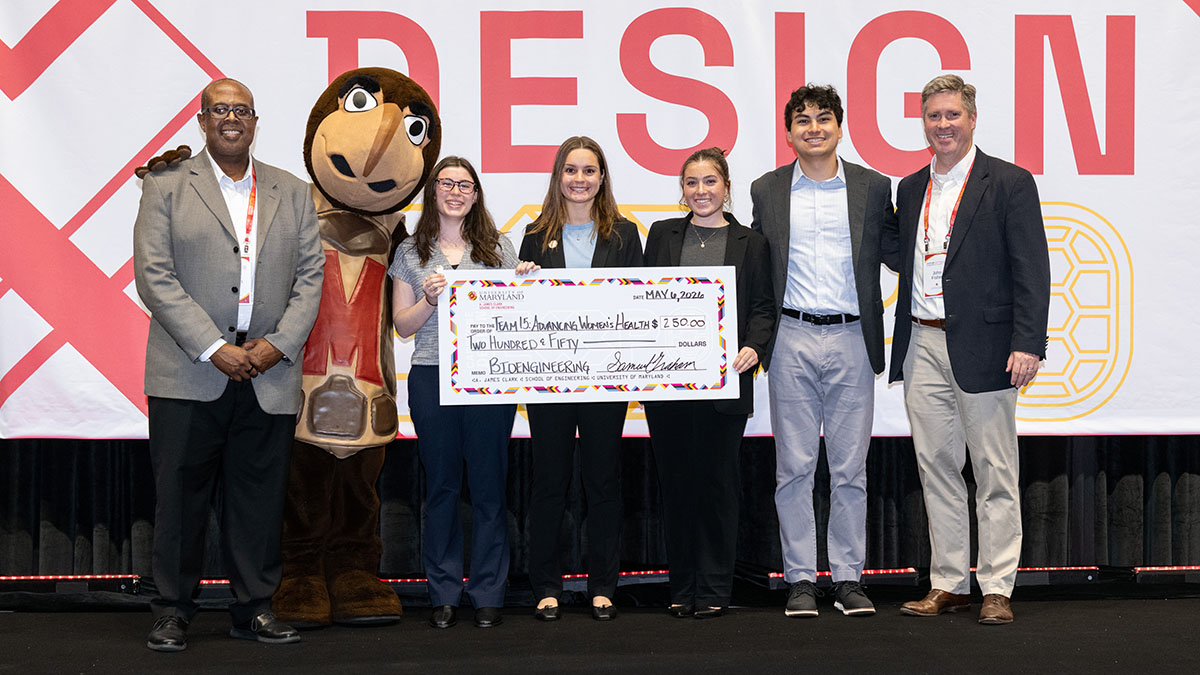
The winning bioengineering team aims to improve the outcomes for vaginal reconstructive surgery in pediatric and adolescent patients.
Bioengineering’s winning project “Novel Vaginal Stent” proposes a low-cost, customizable vaginal stent for post-surgical healing.
Working with team sponsor Children’s National Hospital and their clinicians and under the advising of Assistant Professor Erika Moore, the team aims to improve the outcomes for vaginal reconstructive surgery in pediatric and adolescent patients by improving the standard of care.
The new stent design improves stability and the material design has the potential to reduce complications, including pain, thereby improving patient comfort and healing outcomes.
Better Healing through Improved Patient Restraints
Bioengineering senior Tyler Moran’s team project, “Proximity-Activated Patient Restraint System,” took on personal meaning for the senior.
Under the faculty mentorship of Giuliano Scarcelli and clinical mentorship of Dr. Jeffrey Hasday the team aimed to improve on patient restraint systems used in the ICU to prevent patients from removing critical devices, such as IV lines.
Using a two-camera and custom glove system, the new system addresses clinical need for a safe, effective solution that prevents self-extubation while preserving patient comfort, dignity, and mobility.
“I’ve seen this with my grandparents,” said Moran, who will go to work for Johnson and Johnson after graduation. “If it’s something that could help people—patients, nurses—it’s really rewarding.”
CT Exams with Lower Costs and Time Requirements
One of the two biocomputational engineering projects, “Triple Helix” presented a machine learning-based answer to better chest computed tomography (CT) exams.
Sponsored by Lecturer Bahaa Ghammraoui and advised by Biocomputational Engineering Program Director and Faculty Instructor Lan Ma, the team designed a photon-counting computed tomography pipeline that delivers superior image resolution as well as enhanced material decomposition at a fraction of a traditional CT exam radiation dose—reducing time and expense for clinicians and patients.
“In the little niche of biocomputational engineering, we know bioengineering and we know what these machine learning models can do on the computational side of things,” said senior Braden White. “We were able to put it all together and come up with something new.”
Innovating for Campus, State, and Global Sustainability
Department of Civil and Environmental Engineering
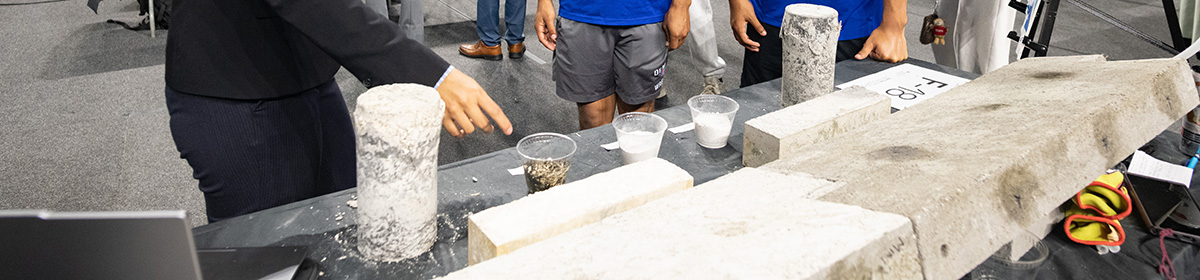
From as close as the campus golf course to as far away as Uganda, the locations—and the problems tackled—varied greatly for the civil and environmental engineering teams.
Across all teams, however, there is a most important takeaway, according to Gretchen Bella, postdoctoral researcher and adviser to the departmental capstone teams: “Not everything goes according to plan.”
For instance, at the beginning of the semester, heavy snow meant field visits and geotechnical testing were delayed. “The learning process of adjusting to schedule hiccups is vital before students go out into their future careers.”
Gunpowder Falls State Park: New Trails, Improved Ecosystem | Dept Winner
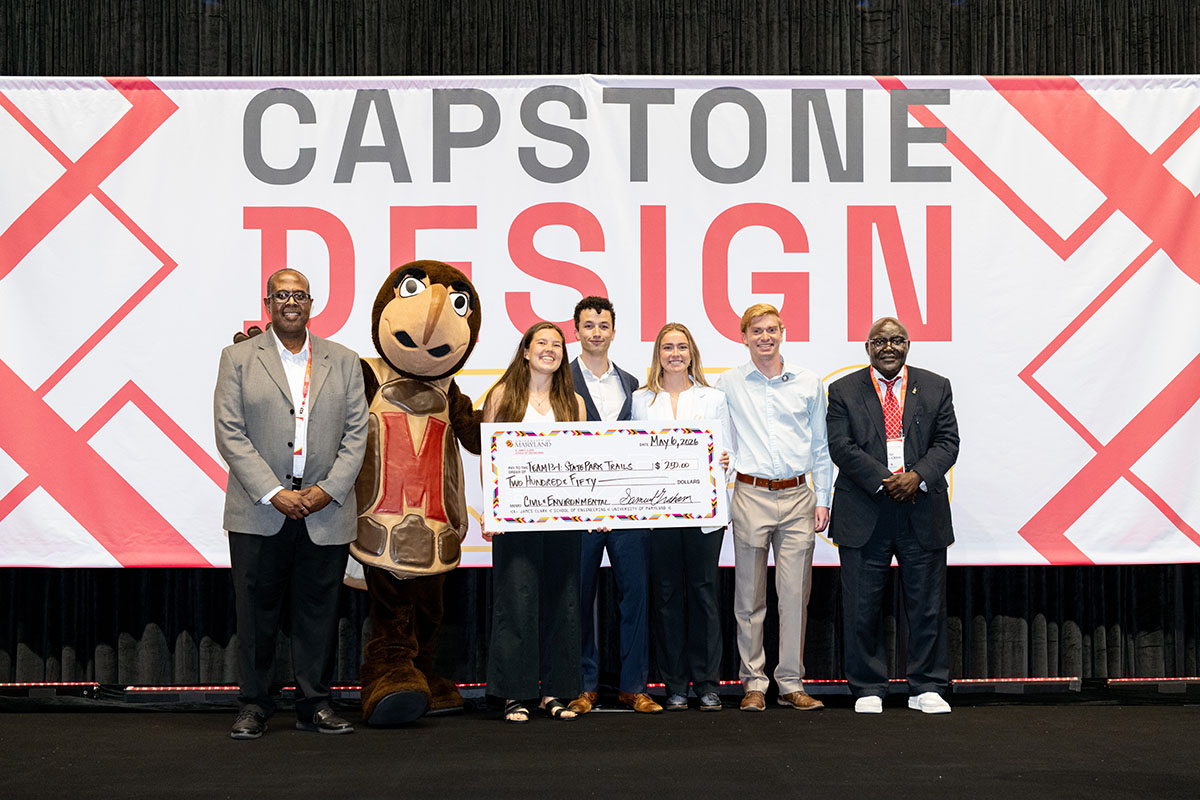
The winning civil and environmental engineering team developed a plan to improve the ecosystem at Gunpowder Falls State Park.
Winning team “Gunpowder Falls State Park Sweathouse Area Trail Network Expansion,” under the mentorship of Dan Hudson with the Maryland Department of Natural Resources (DNR), proposes the development of a multi-use trail network on the south side of the Big Gunpowder Falls in Baltimore County, Maryland.
Overuse of the existing trails in the Sweathouse Area has caused strain on the trails and their surrounding ecosystems. This project aims to identify opportunities to expand the south side trail network to improve connectivity and reduce congestion. The final network was submitted to DNR for the basis of construction and implementation of the new trails in the area.
Site visits, public surveys, field work, the use of a GPS mapping and tracking tool, in addition to consultations with DNR and Maryland Department of the Environment (MDE), ensured a final trail network design that meets stakeholder needs and minimizes environmental impact.
Kempton Mine: Mitigating Harmful Discharge
Another project, “Kempton Mine Complex Remediation,” aims to mitigate mine drainage from an airshaft and borehole in Western Maryland into Laurel Run, a tributary of the North Branch of the Potomac River. The drainage has impaired local ecosystems with highly acidic discharge and high concentrations of dissolved heavy metals.
Working with MDE and engineer Stephen McCord, the team was tasked with improving the airshaft treatment design to enable MDE to efficiently treat the drainage to a pH level as required by the Environmental Protection Agency.
“This [kind of problem] is common in the area, where there are abandoned historic coal mines,” said team member and Maryland native Anthony Terselic.
Next step? The project team will consult with the Abandoned Mine Lands Division of the MDE. “Maybe they will integrate a couple of the things we’ve been working on into their solution,” he said.
Delivering Fire Safety to Campus
Department of Fire Protection Engineering
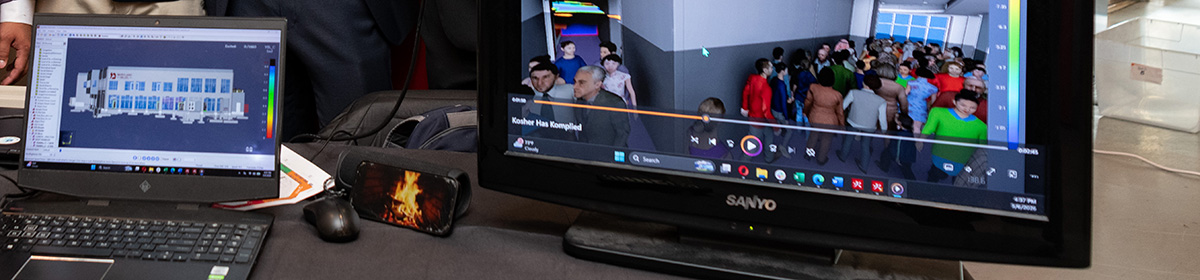
Advised by Clinical Professor and two-time Terp Rosalie Hrybyk ’13, M.S. ’15 the Expo’s fire protection engineering project teams focused on one very local challenge: ensuring safety in the Maryland Hillel building, the new Ben and Esther Rosenbloom Center for Jewish Life, a 40,000-square-foot center that includes dining areas, worship spaces, study areas, classrooms, and more. Student teams were provided access to project drawings and a site visit by the building’s architects.
Fire safety sub projects included addressing components of the center, including a two-story opening at the front of the building, an open stair configuration, and an open concept design that opposes compartmentalization.
Demonstrating the Benefits of an Open Stairway | Dept Winner
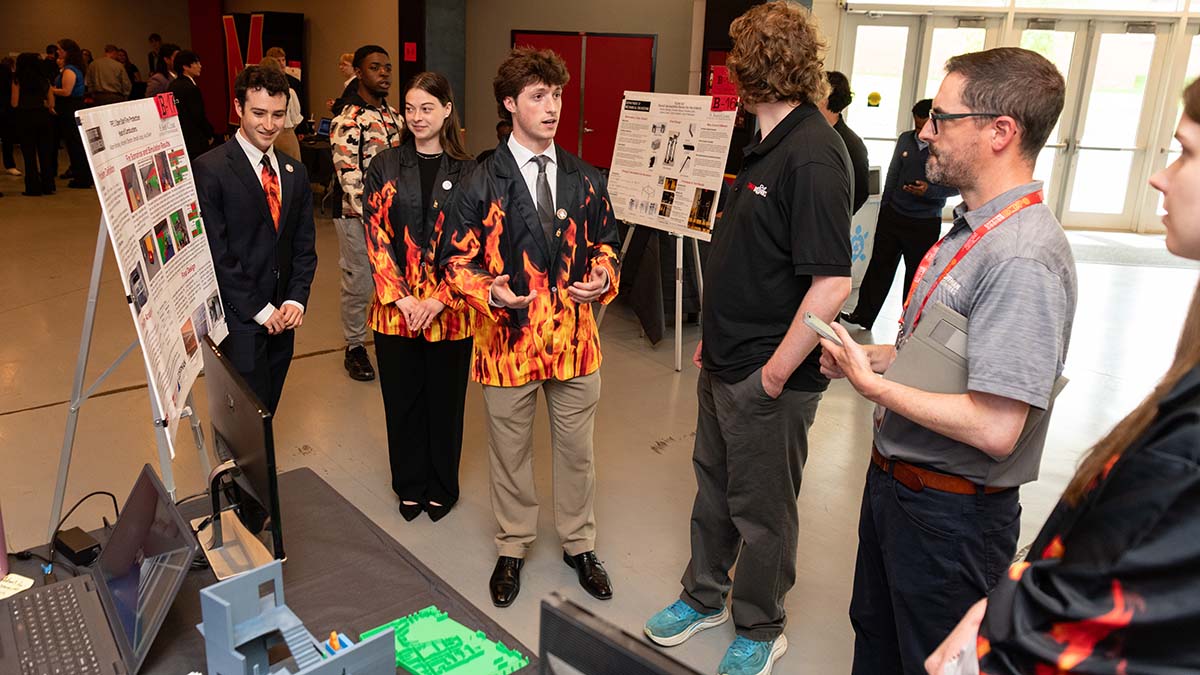
The winning fire protection engineering team demonstrated the safety of Maryland Hillel’s open staircase.
The winning project, “Open Stair Fire Protection Heat of Combusters,” designed a performance-based test to justify the two-story open space and reduce cost.
Safe Egress with Effective Building Security
Another team, “FPE Security Fire Protection – Soot Happens,” presented a performance-based fire protection design analysis evaluating alternative fire protection strategies, including smoke baffles and delayed egress locking doors. Using fire and egress modeling, the team’s results demonstrated that the proposed design maintains tenable conditions and supports safe evacuation and architectural and security objectives.
Team member Mary Comegna, who will work for Jensen Hughes after graduation, said the real-life aspect made the Expo project extra rewarding. “In fire protection engineering, our goal is life safety. It’s always rewarding to protect people, property, and the environment,” she said. “But in the beginning, we were mostly looking at 3D renderings of the building. So it was a good experience to get in there, see the doors and the two-story opening we were working on, to spur ideas for our solutions.”
Meeting Societal Needs with Innovation
Department of Materials Science and Engineering
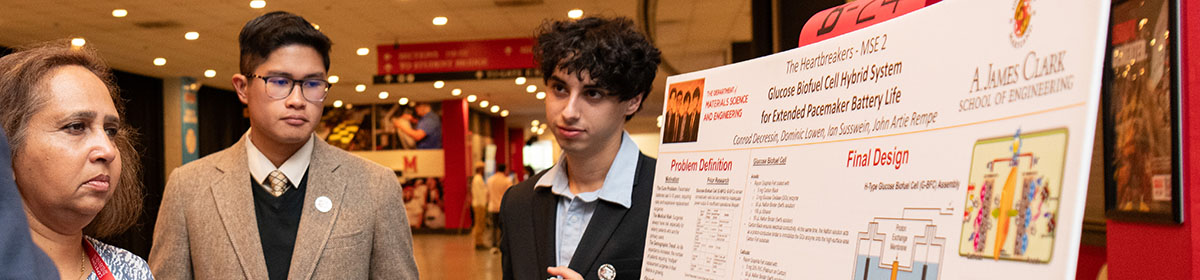
From extending the life of pacemaker batteries to achieving better heat transfer in solid rocket motors, “all of our team projects meet a need—societal, industrial, or technical,” said Professor Ray Phaneuf, who advised the department’s three Expo entries.
In addition to working on improving technology, the capstone process develops skills that will help propel students into their careers. “The experiences the students have had in choosing a project, working as a team to carry it out, prototyping, and characterizing the results will propel them forward in carrying out research and development in a commercial setting or research in graduate school,” he said.
Improved Insulation-Liner Adhesion for Solid Rockets | Dept Winner
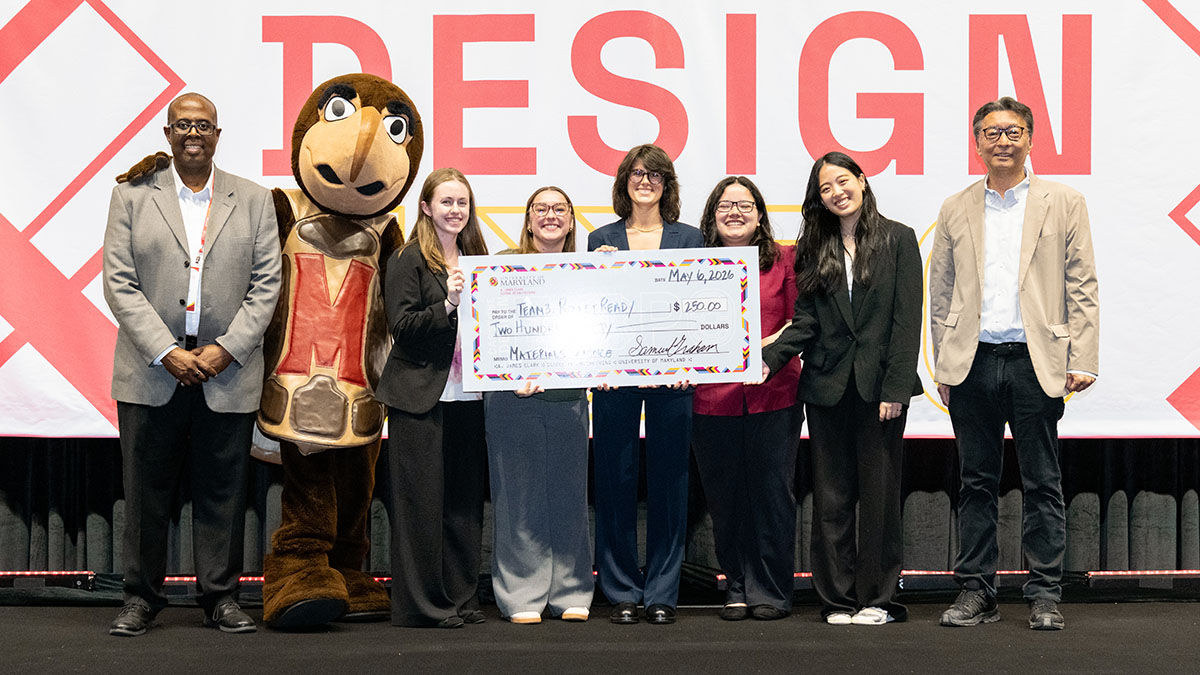
Team sponsor Northrop Grumman could benefit from the adhesion research by the winning team of materials sciences engineers.
Winning team “Rocket Ready” investigated the use of plasma surface treatment to improve insulation-liner adhesion for solid rocket motor applications, proposing a scalable process for industry stakeholders, including team sponsor Northrop Grumman.
Cooling CPUs & Microelectronics
Another project, “Anti-Stokes Laser Cooling for Electronics,” tackled the thermal management challenges in modern electronic devices, including CPUs and microelectronics. The team built upon previous research on a high performance halide perovskite quantum dot system and added an optically transparent thermally conductive matrix for cooling applications.
The process required the team to grow cesium lead bromide crystals, a material known for its high photoluminescence quantum yield. Such a forward-looking project could become reality, with quantum computing transitioning from the lab to the marketplace.
“You might see a solution using light like this in a silicon computer for quantum computing,” said team member Elliot Schweiss.
VIP@Maryland at Expo
The Vertically Integrated Projects (VIP) Model for Experiential Learning creates long-term, large-scale projects that unite undergraduate education and faculty research, innovation, design, and entrepreneurship through multidisciplinary teams.
One VIP@UMD team competed at the 2026 Capstone Design Expo: Go With the Flow! is developing a series of instructional kits that can be used at home to support college-level fluid dynamics courses under the guidance of Associate Dean of Undergraduate Programs and Professor Ken Kiger, who, along with the Office of Global Engineering Leadership, has led the VIP efforts.
The take-home kits, which are planned or in development include: manometry, propulsion with thrust stand, wind tunnel with force balance, pipe flow losses, fan/pump characteristics, and flow separation with form drag. They are enabled by the recent development of high-power ducted fans, inexpensive DC power supplies, and affordable motor controllers. Students from ENME331 (Fluid Mechanics) can opt to perform their thrust stand lab on the prototypes in place of their traditional lab, giving the team an opportunity to analyze student interaction with the setup.
A chemical engineering major Abdul Wahab appreciates the multidisciplinary aspect of the team. “We are a mix of majors, including computer science, civil engineering, mechanical engineering,” he said. “I can’t use computers as well as a computer science major,” he said. “It’s different minds coming together and different skills and experiences, so it’s much better.”
All photos by Mike Morgan
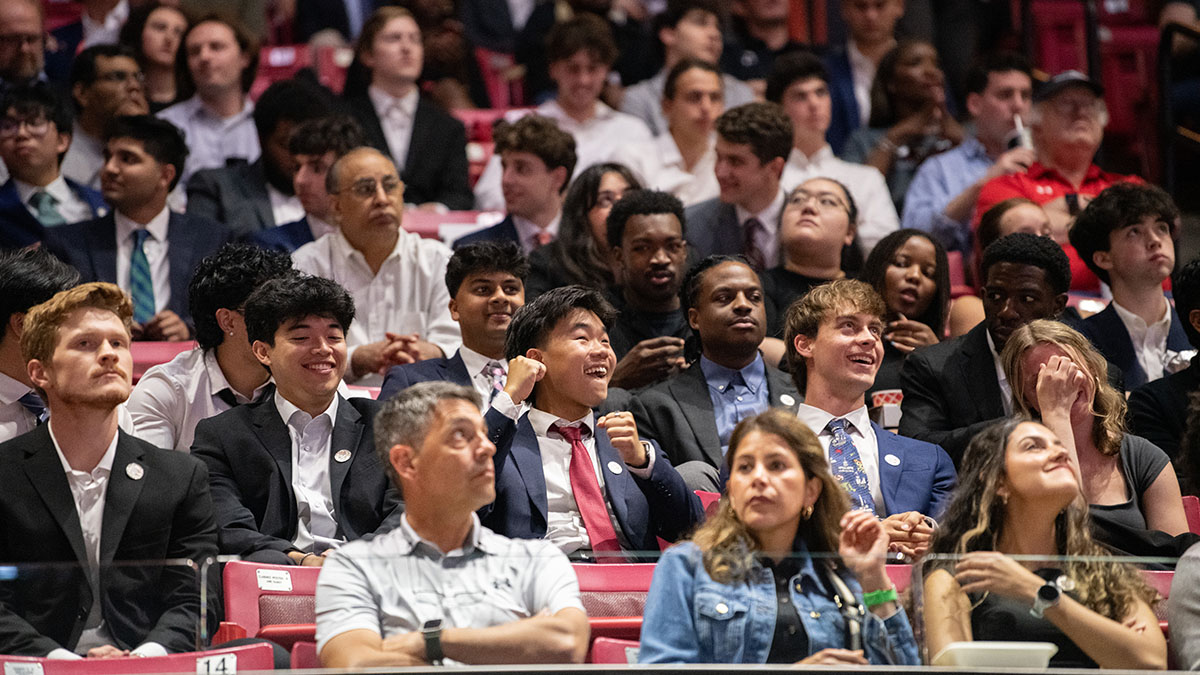
Our Capstone Design Expo is an expansion of individual departments’ Annual Design Day, where teams of students present project prototypes built to solve selected engineering problems.
Expo teams are expected to demonstrate an ability to apply engineering fundamentals to design solutions while considering relevant technical and social outcomes, as well as ethical implications of their solutions.
Department sponsors and corporate partners collaborated with student teams and added real-world—and real stakes—elements to the senior projects.
Winning Projects
- Aerospace Engineering: I-M SPARX
- Bioengineering: Novel Vaginal Stent
- Chemical & Biomolecular Engineering: Modernizing the Process and Design of Acetylsalicylic Acid Production
- Civil & Environmental Engineering: 13-1 Gunpowder Falls State Park Trails
- Electrical & Computer Engineering: A-3 Smart Submersible Marine Vehicle
- Fire Protection Engineering: Open Stair Fire Protection Heat of Combustors
- Materials Science & Engineering: Rocket Ready
- Mechanical Engineering: Knot Engineers
Published May 13, 2026
Related Stories
Stories / August 26, 2026
Graham Named Honorary ASME Member

Stories / August 25, 2026
NSF Renews Maryland-Led Quantum Simulation Institute’s Funding

Stories / August 19, 2026
Smooth Sailing: MATRIX Dives Into Ship Inspecting

Stories / June 25, 2026
Grand Challenges 2.0: Engineers Partner to Unlock Solutions

Stories / June 25, 2026
Aircraft May Refuel Themselves - With Help From AI

Stories / April 20, 2026
Ten Students Selected for Apple Program

Stories / February 20, 2026
Anticipation Builds as Zupnik Hall Nears Completion
Stories / December 21, 2023
Six Clark School Faculty Receive 2024 DURIP Awards
Stories / October 25, 2022
Department Celebrates Achievements During Annual ‘Welcome...
Stories / December 17, 2021
Nine Maryland Engineers Recognized as Being "One in 1,000"